Client: U.S Environmental Protection Agency Region 10
Location: Bainbridge Island, Washington
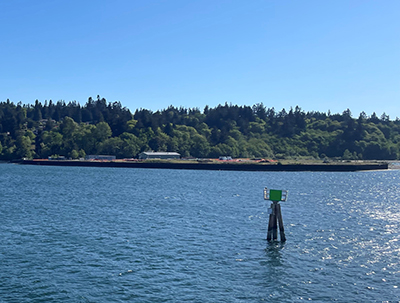
The Wyckoff-Eagle Harbor Superfund Site is a nationally recognized environmental remediation effort addressing legacy creosote contamination from decades of operations at the former Wyckoff wood-treating facility. The work at the site, added to the EPA’s Superfund National Priorities List in 1987, is central to protecting the island’s main aquifer—the primary drinking water source for local residents—and transforming the area for future public use.
EA was selected to execute a critical phase of the overall remediation, focused on the demolition of thermal treatment pilot plant, removal of legacy infrastructure, and modification of the groundwater treatment and extraction system. This work was essential to prepare the site for subsequent phases, including installation of a new seawall and in situ stabilization and treatment of upland soil.
The project scope included the removal of 4,000 linear feet of steam injection piping and wells, abandonment of 69 monitoring and extraction wells, installation of new monitoring wells, excavation and relocation of 9,000 bank cubic yards of contaminated soil, and significant upgrades to the groundwater treatment plant’s electrical controls. EA’s team completed these complex tasks within a compressed 9-month schedule.
Collaboration was at the heart of this project’s success. With limited site access and numerous simultaneous activities on a compact footprint, E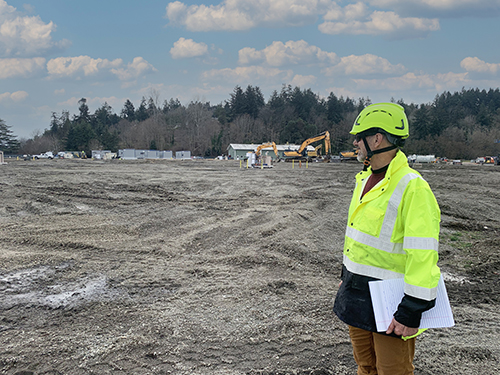 A coordinated closely with 4 major subcontractors, EPA, and 2 other EPA contractors working on site. Use of daily safety meetings, weekly coordination meetings, shared project management platforms, and open communication channels ensured that EA’s demolition, abandonment, and upgrade work proceeded efficiently, while other contractors maintained continuous operation of extraction wells and the treatment plant to protect the aquifer.
The Wyckoff-Eagle Harbor Superfund Site project exemplifies how teamwork, innovation, and a shared vision can overcome technical and logistical challenges. By successfully completing this phase, EA helped set the stage for continued remediation and the eventual transformation of the site into a public park—delivering lasting benefits for the Bainbridge Island community and safeguarding environmental health for generations to come.