Location: St. Louis River Area of Concern, Duluth,Minnesota
Client: U.S. Environmental Protection Agency Region 5, U.S. Steel Corporation
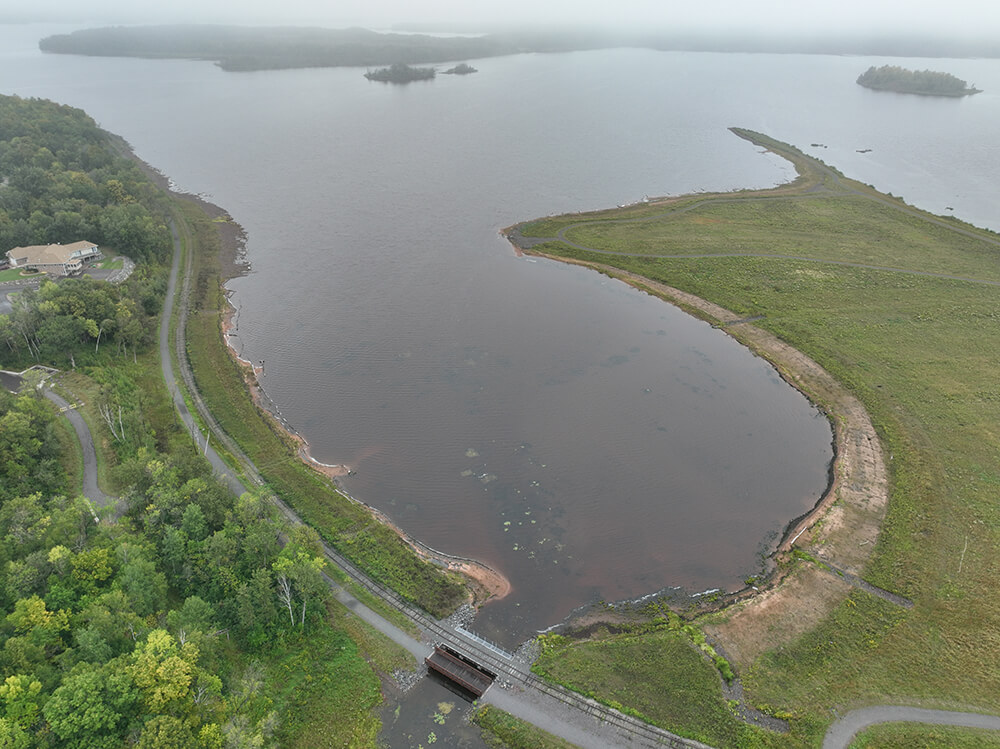 The Spirit Lake Estuary Remediation and Restoration project represents a landmark achievement in environmental engineering and stewardship. The project was spearheaded by EPA Great Lakes National Program Office and their project partner, United States Steel Corporation under the Great Lakes Legacy Act. EA led the consultant/contracting team.
Located along the St. Louis River near Duluth, Minnesota, Spirit Lake experienced environmental degradation due to industrial activities and upstream inputs, resulting in elevated concentrations of heavy metals and polycyclic aromatic hydrocarbons in sediments. The project addressed severe impacts by remediating 1.3 million cubic yards of sediment, including 460,000 cubic yards dredged and 96 acres subaqueously capped. Restoration efforts targeted fisheries, wetland and aquatic plant communities, and recreational opportunities, supporting the delisting of the St. Louis River as a Great Lakes Area of Concern.
Spirit Lake stands out for its creative integration of engineering and nature-based restoration. The project employed a systems approach, balancing remediation, habitat restoration, and stakeholder needs.
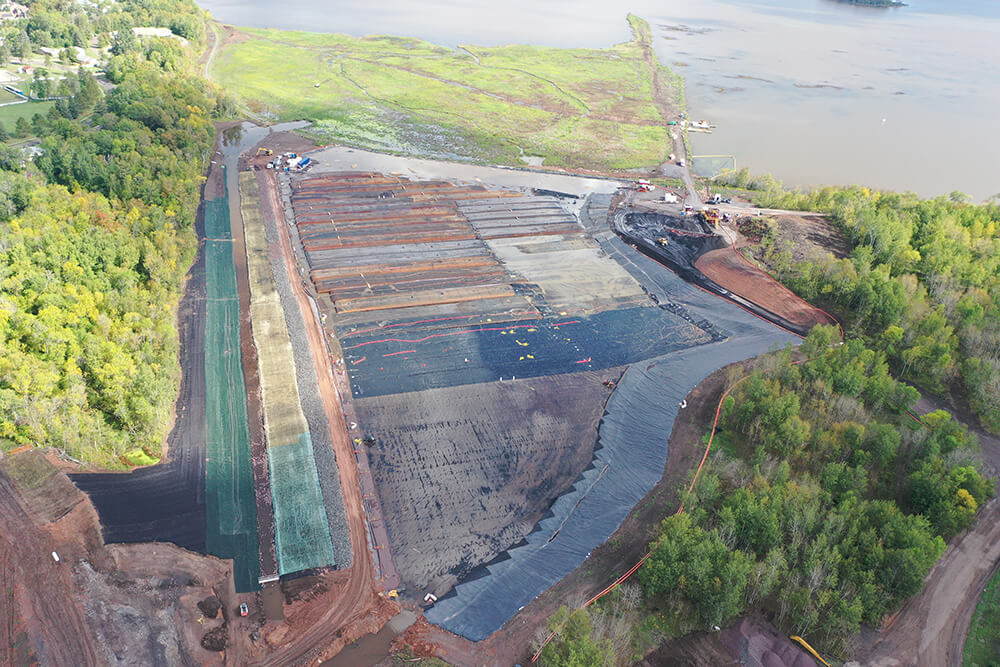 Remediation design and construction overcame the unique and complex challenge of addressing competing needs for deeper waters, thick underwater caps, and limited onsite disposal. The project team innovated multi-layer reactive caps to conserve water depth, adapted use of multiple dredging technologies, and carefully planned water depth regimes to create a robust remedy with a mosaic of wetlands. The project used advanced bathymetric studies and hydrodynamic models, a robust quality assurance/ quality control program, and innovative stakeholder engagement strategies. Cost efficiency was achieved by optimizing material reuse and winter construction. Notably, adaptive management was embedded throughout design, permitting, and construction, allowing for real-time responses to evolving site conditions and regulatory requirements.
Other key innovations included adaptive planting elevations to accommodate fluctuating lake levels, advanced bathymetric and hydrodynamic modeling, real-time adaptive management throughout design and construction, and collaborative engagement with federal, state, tribal, and local partners, ensuring cultural sensitivity and shared ownership. Jointly funded under the Great Lakes Legacy Act, the project’s $186.5 million construction value was optimized through material reuse and collaborative design.
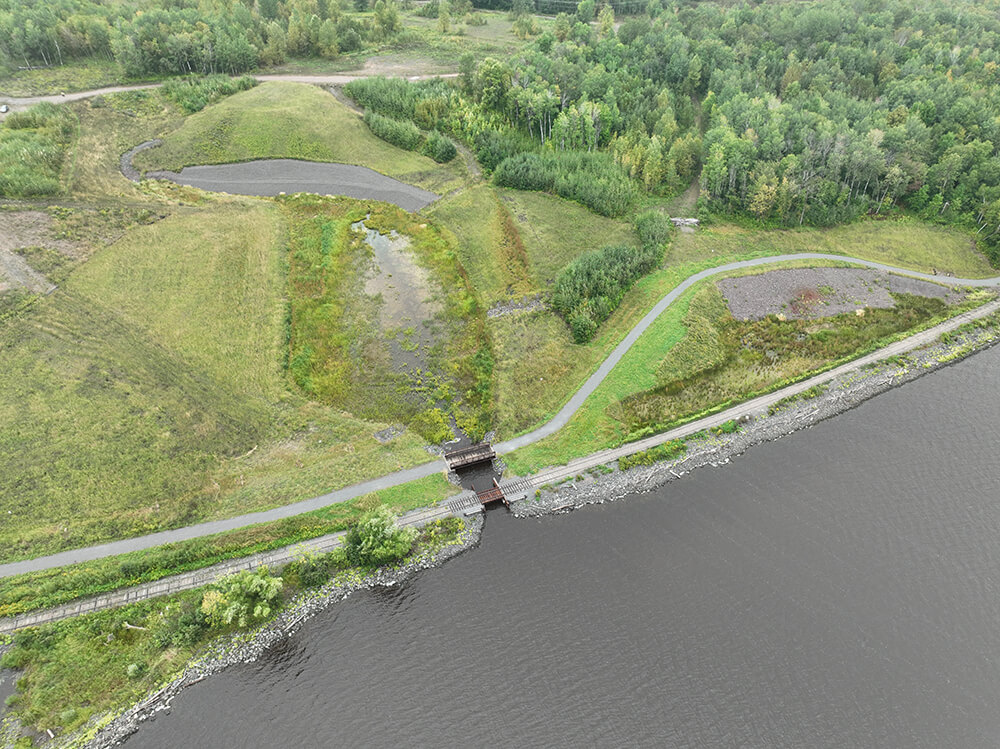 The project achieved verifiable environmental and community benefits:
- 3 million cubic yards | impacted sediment remediated
- 42 acres | shallow sheltered bay constructed, supporting fisheries
- >360,000 | aquatic plants and extensive native upland plantings installed
- 2 miles | new pedestrian trails created
- 138 acres | habitat restored
The work also involved creation of fishing areas, bridges, pause points, and a kayak launch as well as retrofit of historic rail bridges.
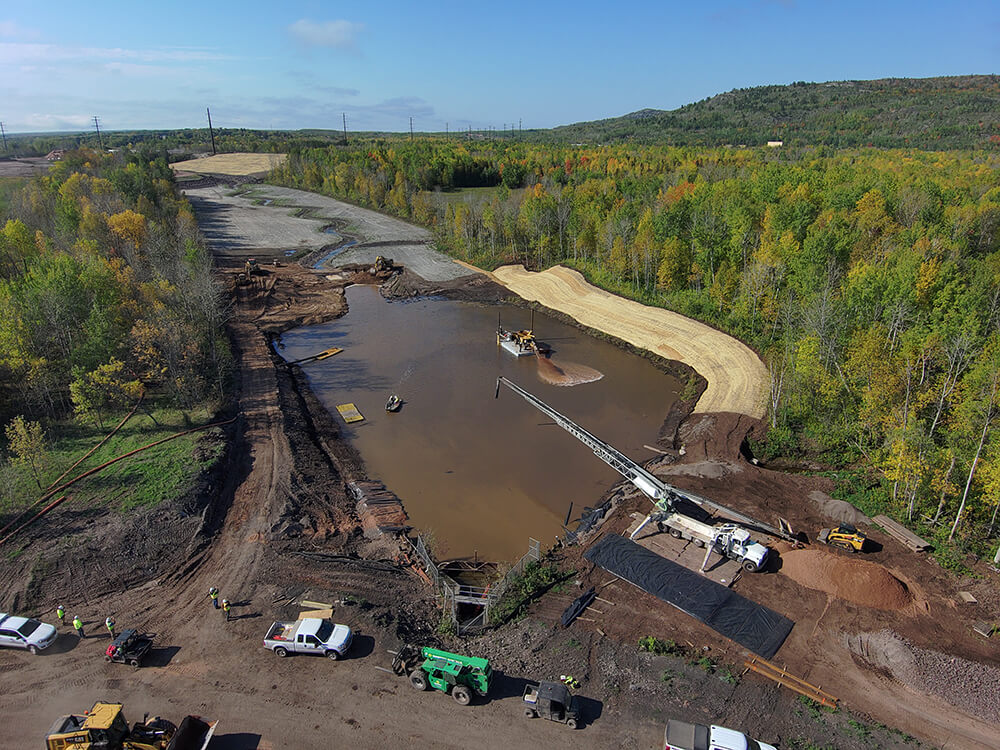
Spirit Lake’s success was underpinned by advanced planning and adaptive management. The team innovated with multi-layer capping, diverse dredging technologies, and stakeholder-driven design. Water quality was rigorously managed, and plantings were monitored for establishment and ecological success.
The revitalized Spirit Lake supports healthy families, recreation, and a vibrant local economy. The impact from remediating and restoring Spirit Lake extends to the Duluth community, tribal stakeholders, fish and wildlife, and future generations. Enhanced access to the river, improved recreational infrastructure, and revitalized habitats benefit both local residents and the broader ecosystem.
The Spirit Lake Estuary Remediation and Restoration project exemplifies engineering excellence in environmental stewardship. Its comprehensive, adaptive, and community-focused approach sets a new standard for sustainable remediation and restoration, delivering lasting ecological and social benefits.
View and Download Video Transcription with Audio Descriptions